Carnegie Moscow Center

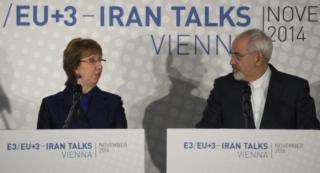
After another failed attempt to reach an agreement on the Iranian nuclear program, all now depends on whether Russia, the United States, and other states can find the political will to take responsibility for global security.
Russian participation in the nuclear talks has demonstrated that despite the depth of the Ukrainian crisis and all the existing conflicts between Russia and the West, there are no reasons to consider Russia a purely destructive force that is bent on harming the West.
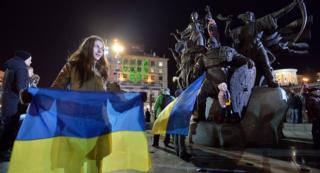
Ukraine may be heading not toward federalization or decentralization, but feudalization. To avoid this, the focus should not only be on central, macro-level reforms but also on building civil society to make those larger reforms sustainable.
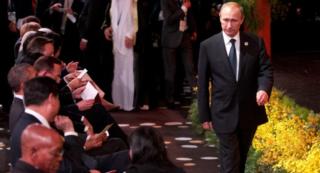
In the new ideological cleavage that has opened up between Vladimir Putin’s Russia and Western countries, one idea divides them like no other: the meaning of regime change.
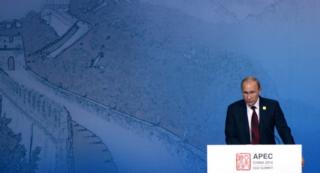
Many are talking about Russia’s pivot eastward, but is it working? Eurasia Outlook posed the question to some leading experts in the field in order to gather some thoughts about the policy’s effectiveness.
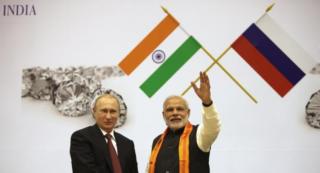
Despite the large number of bilateral agreements signed as a result of Putin’s visit to Delhi, there are many obstacles to an improved relationship with India that require pragmatic approaches from both sides.
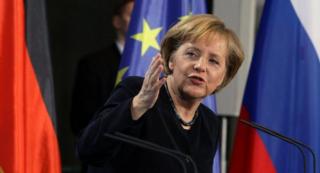
Many in Russia believe that the EU sanctions appeared as a result of the Ukrainian conflict and pressure from Washington. In fact, the reasons for the current deterioration in Russia’s relations with Europe are far more profound. But this does not mean that another—European—front in Russia’s confrontation with the West has now been opened.
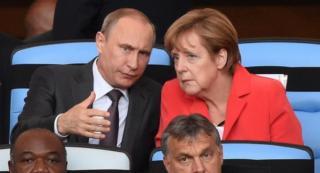
History teaches us that conflict is not a natural condition of Russian-German relations. There is a need for greater introspection and moderation in the use of force, both military and economic.
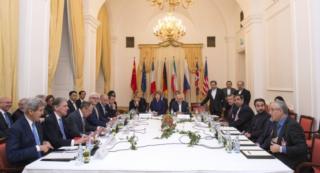
The experience gained in Vienna may be useful in future talks. In order to make the further negotiations effective, both Obama and Rouhani need to find a way to achieve a consensus of support for their actions within their own political establishments.
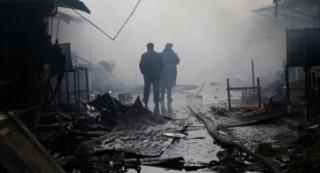
The terrorist attack that shook Grozny during the night of December 4 has put in question the authorities’ ability to control the situation in the North Caucasus, even in the seemingly stable Chechen Republic.
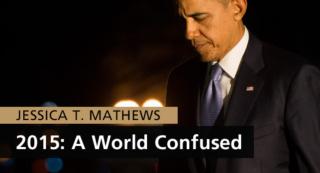
U.S. foreign policy in a more difficult, intrusive world.
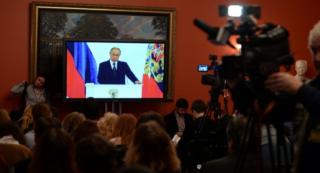
Several Carnegie experts from different offices discuss the significance of Putin’s address to the future of Russia and its role in the international community.
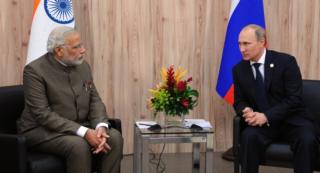
It appears that Vladimir Putin’s visit to India will not lead to a breakthrough in Russian-Indian relations. If nothing is done soon following his visit to materially upgrade the relationship, its stagnation will become qualitative, not just quantitative.

What do you expect from Vladimir Putin’s visit to India? Eurasia Outlook posed the question to some leading experts in the field in order to gather some predictions about the meeting’s significance to Russia-India relations moving forward.
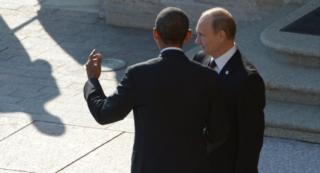
Russia and the United States have entered a period of severe confrontation. Caution, sober calculations, and strategic vision of possible international developments are necessary in the present circumstances.
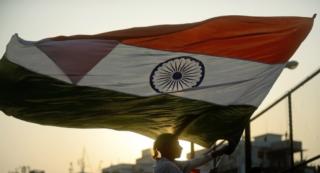
Russia and India should initiate the creation of a roadmap for developing Russian-Indian relations. Without a binding roadmap, the “strategic partnership” will remain nothing but pretty window dressing that conceals the absence of strategy.
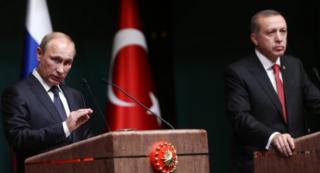
President Vladimir Putin’s recent state visit to Turkey outlined the long-awaited breakthrough in the bilateral relations of the two countries. The meeting brought new life to a relationship that had been characterized by the “limits of growth” problem and that required a qualitative broadening of the established model of cooperation.
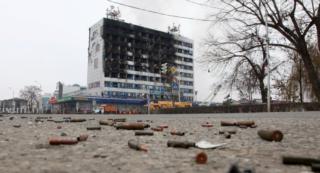
One of the most important consequences of the dramatic violence in Grozny may be the impact it has on Russia-Western relations. Amidst a stand-off with the West over Ukraine, the Kremlin may interpret this terrorist acts as “Western attempts to fuel instability inside Russia.”
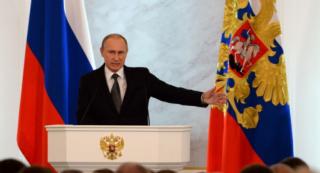
Vladimir Putin’s annual address to parliament on December 4, 2014 has laid down the Kremlin's medium-term strategy. The next four or five years will be very difficult if not critical for Russia, and the Russians, in Putin’s view, absolutely must meet the challenges and win.
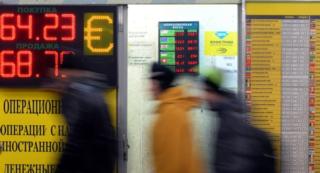
The falling oil price and rapid devaluation of Russian currency not only affect the economy, the budget, and the joking habits of the elite, but also have an effect on Moscow’s foreign policy.