Carnegie Moscow Center

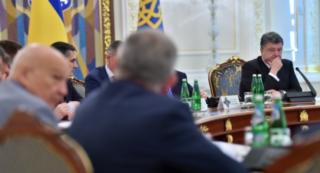
Ukraine is teetering on the brink of default and its government is devoting more energy to public relations than actual reforms. Recent developments in Ukraine are likely to fuel the creation of a new black hole in Europe.
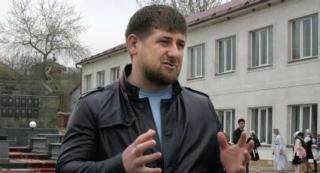
Ramzan Kadyrov, head of the Chechen Republic in the North Caucasus, is now firmly entrenched in Russian politics at the federal-level, and it appears that he is there to stay, because Putin and Kadyrov really need each other.
The current political crisis in Russia’s relations with the West gives a strong impetus to Russian rapprochement with Asian countries. However, many analysts are of the opinion that no significant progress in this area has been achieved as of yet.
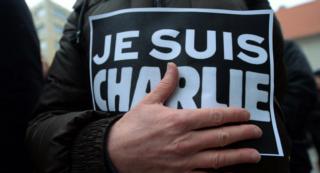
An optimal model for the painless existence of Muslims in an alien cultural and religious environment has not yet been found and is unlikely to appear in the near future. In essence, Europe is dealing with a conflict of identities, which continues to increase.
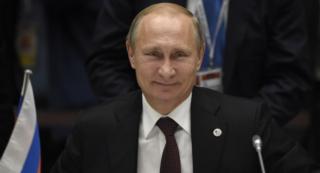
To escape the analogy of a revolution, Vladimir Putin must rise above the rapacious elite, and to avoid being overthrown, he must replace it.
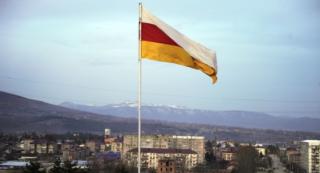
Russia and South Ossetia are about to sign a “Treaty of Alliance and Integration.” However, normalization of relations with Georgia is impossible as long as Moscow continues to strengthen its grip on South Ossetia and Abkhazia.
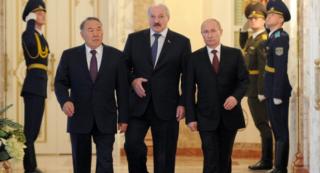
<i>Eurasia Outlook</i> asked several experts what is the future of the Eurasian Economic Union (EEU), which officially came into being on January 1.
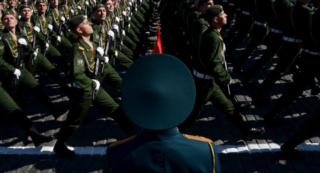
A book by the younger authors from the Moscow-based Center for Analysis of Strategies and Technologies (CAST), <i>Brothers Armed: Military Aspects of the Crisis in Ukraine</i>, takes stock of the changes wrought in the Russian military organization and also analyzes the operation of the Russian forces in the current crisis in Ukraine.
Throughout the year, Eurasia Outlook has been trying to bring to your attention a variety of views from across the vast region on the region itself. At the beginning of 2015, we are taking a customary holiday break. We will be back on January 12.
For the Russian economic and political system, as well as for the country’s foreign relations, the current economic crisis is an existential one. Russia will exit from it in a very different form from what it is today.
2014 was a year of crisis. Ebola, ISIS, and Donbas are now part of the global lexicon. Eurasia Outlook experts weigh in on how crises on Russia’s periphery affected the country, and what these developments mean for Moscow in 2015.
For over two decades, no one in the West felt the need for regulating Russia’s relations with NATO. The lesson of the Napoleonic wars about the need to integrate a former adversary—which was forgotten after WWI—has been forgotten again.
Eurasia Outlook asked its experts to reflect on the dramatic events of 2014 and to share their predictions for Russia's future and for its role on the global stage going forward.
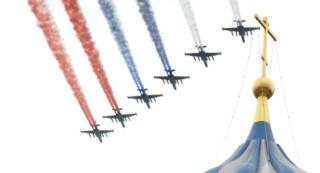
As one of his final acts in 2014, President Putin signed on December 26 the country’s new military doctrine. The new doctrine makes it clear that even if the West is not officially an adversary, it is a powerful competitor and a bitter rival, a source of most of military risks and threats.
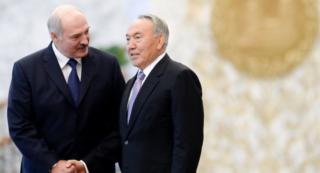
The Ukraine crisis has had an increasingly negative effect on Russia’s relations with Belarus and Kazakhstan, its closest allies and partners in the Customs Union and Eurasian Union.
After the initial shock the Ukrainian crisis brought, Central Asian states have gradually come to the conclusion that they should continue dealing with Russia. Still, none of these states are prepared to be totally controlled by Russia.
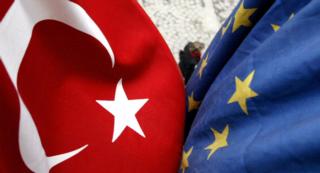
President Erdogan strives to find a sound strategy to minimize the current risks in foreign affairs. Despite resentment of the EU and the current stagnation of Turkey’s accession process, the EU retains its influence over Turkey because of the Turkish economy’s great dependence on the EU.
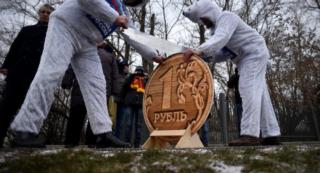
Eurasia Outlook asked several experts what, if anything, can be done by Russian policymakers in order to weather the perfect storm descending on the country’s economy.
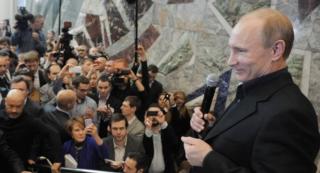
The crisis presents Putin with an opportunity to tighten his grip on business, to see who is loyal and who is not, to pick winners and losers, to decide who will receive state support and whose assets should be “redistributed”.
In 2014, Russia broke out of the post–Cold War order and openly challenged the U.S.-led international system. Moscow’s new course is laid down first and foremost by President Vladimir Putin, but it also reflects the rising power of Russian nationalism.