Carnegie Moscow Center

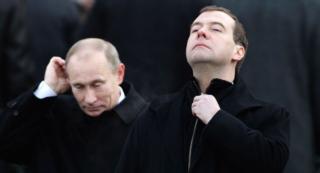
Russian President Dmitry Medvedev’s announcement of new initiatives for improving the investment climate in Russia and reducing corruption demonstrates his readiness to run for a second term.
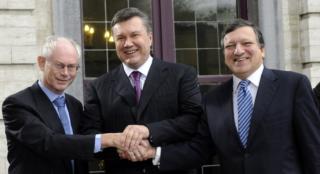
A legally binding free-trade agreement could be a key instrument in the EU's efforts to push Ukraine to reform.

While Russians are increasingly calling for political reforms, the high price of oil allows the Kremlin to increase social spending and avert broad public discontent for a while longer.
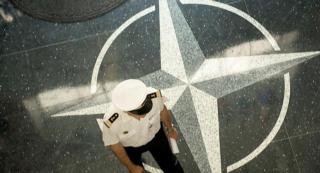
As NATO debates its future nuclear policy, it should focus on concrete measures to maintain a credible nuclear deterrent in the medium term and avoid abstract debates over complete disarmament or the need to keep nuclear weapons indefinitely.

Following December’s presidential election in Belarus, which European observers said failed to meet international standards, Alexander Lukashenka claimed an implausible landslide victory and launched a wave of political repression.
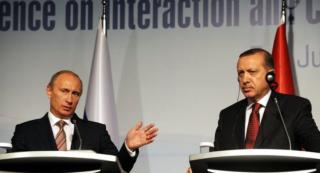
Nearly two years after Russia and Turkey signed a series of energy cooperation protocols, the two countries remain unable to reach a breakthrough in their energy relations.
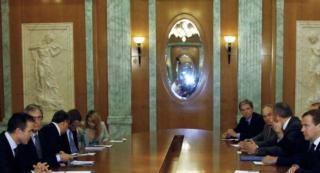
Moscow's position on military intervention in Libya plays into Russia's foreign policy focus on modernization and cooperation with Western Europe and the United States and is likely to be a factor in the upcoming 2012 presidential elections.
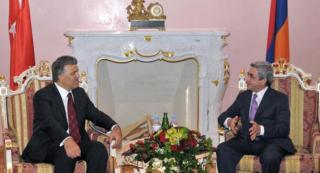
The reluctance of Armenia and Azerbaijan to commit to peace negotiations over Nagorny Karabakh blocks the efforts of the international community to establish peace and U.S. bilateral interests in the two nations constrain a more aggressive push to force a deal.
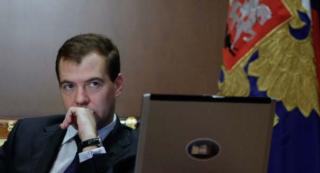
Russia’s decision to abstain on the UN Security Council resolution on Libya marked a new milestone in the evolution of Moscow’s foreign policy toward a more pragmatic approach.
The Russian authorities maintain a monopoly on political power and governance, and although there has been some movement in Russian civil society toward community building and activism, this activity remains fragmented and localized.
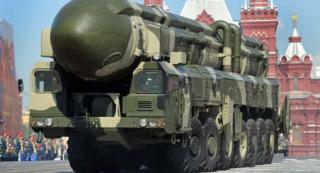
While nuclear arms control is enjoying a renaissance of late, whether that momentum dissipates or leads to further agreements will require a painstaking effort by U.S. and Russian diplomats and experts to move past Cold War prejudices and the mistakes and misunderstandings of the post-Cold War era.
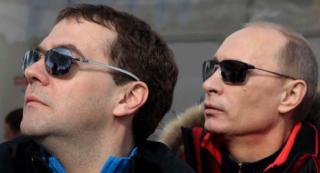
Public confidence in Russia's ruling tandem has plummeted to record lows, and a majority now believes their country is headed in the wrong direction. The country needs reform, but it may be too late for the system to save itself.
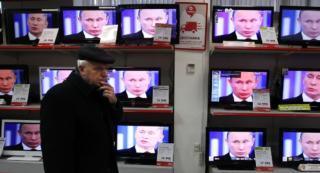
Increasingly, Russian experts believe that economic reform in Russia is impossible without the implementation of large-scale political modernization.

In spite of predicted growth in 2011, the Russian economy faces a number of serious challenges as it recovers from the global financial crisis.
As U.S. policy seeks to create the conditions that would allow for deep reductions in nuclear arsenals, the United States and Russia can undertake a practical approach to their stockpiles to 500 nuclear warheads each and those of other nuclear-armed states to no more than about half that number.

The feelings of optimism and hope that accompanied the Tunisian and Egyptian revolutions have recently been mixed with concern over the course of events in Libya, Yemen, Bahrain, and other countries.

Russia’s choice to abstain on the UN Security Council resolution on Libya demonstrates that Moscow’s new foreign policy is shaped by its vital interests and its desire to maintain good relations with both the EU and the United States.

The launch of U.S. and European military operations against Libya’s Muammar Gaddafi could have unexpected consequences and encourage some regimes to step up their efforts to develop a weapons arsenal in order to prevent the possibility of outside attack.
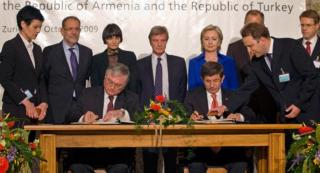
Although the Armenia-Turkey normalization process which began in 2008 seemed promising, it only made the situation throughout the South Caucasus worse when it stalled in April 2010.
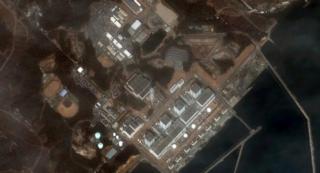
As Japan struggles to find ways to cool its damaged nuclear reactors, it is increasingly clear that it is in the world’s best interest to ensure that nuclear operators can effectively handle unpredictable and even extreme external events that might impact their installations.