Carnegie Moscow Center

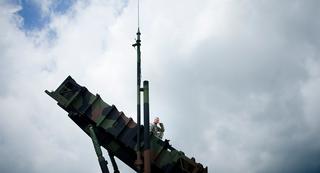
Moscow needs to remain calm and hold back emotions. U.S. withdrawal from the INF Treaty won’t compromise Russia’s security, which rests on the pillars of nuclear deterrence and mutually assured destruction.
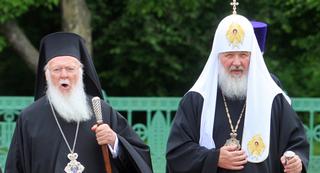
The Russian Orthodox Church has broken off full communion with the Patriarch of Constantinople after he took steps to recognize two Ukrainian Orthodox Churches that Moscow regards as “schismatic.” Russian Orthodox believers will bear the brunt of these self-imposed sanctions. But it didn’t have to be this way.
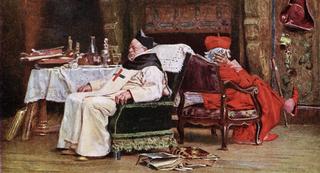
There have been many schisms in the Eastern Orthodox world, some more peaceful, some more agonized. Moscow and Kiev should choose one of the more peaceful splits as a good historical example.
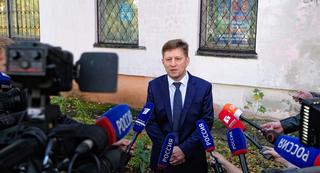
The opposition victors in Russian regional elections were not anti-establishment liberals but traditionalists and paternalists, unhappy with the Kremlin’s modernization agenda.
Companies close to the Kremlin are creating a monopoly on data in Russia. Although the data market has yet to take shape, it has already been turned into a monopoly by the president’s decisions. Competition takes a back seat to matters of national importance.
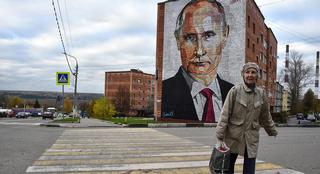
Is Putin losing his touch? A new poll suggests that pension reform has damaged his approval ratings.

The trade war with the United States has piqued China’s interest in Russian soybean imports. Russian officials are optimistic about the prospects of increasing soy exports to China, but their expectations are unrealistic.
Russia’s crony-capitalist economic model requires an ever-increasing volume of funds to be burned on lavish mega-projects that generate huge profits for a dozen families close to the Kremlin. Now it seems to be pensioners’ turn to make the sacrifices needed to finance the appetites of Russia’s new aristocracy.
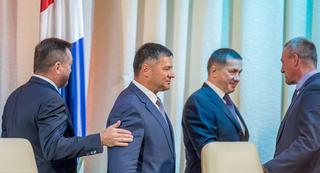
The Kremlin’s chosen candidate lost the gubernatorial race in Russia’s Primorsky region. In part, that can be chalked up to local economic and political conditions. But while the Primorsky loss might seem like an outlier now, it may also foreshadow problems that the Russian regime will encounter as the country moves into the 2020s.
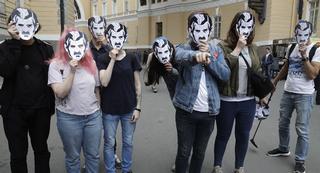
A crackdown on online “extremism” has drawn rare resistance from both the Russian public and the political elite, forcing the Kremlin to support changes to the country’s main anti-extremism law.
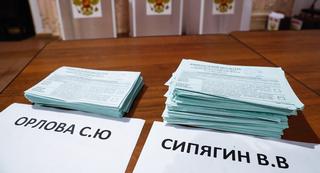
The Kremlin obviously understands that elections held under the old rules will result in more defeats. The rules, therefore, will have to change. Just like in 2013–2014, when opposition candidates started winning mayoral elections, the Kremlin first welcomed their victory, but then dispatched local legislatures to scrap mayoral elections altogether. They remain in just seven out of 83 regional centers. A similar fate may now await gubernatorial elections.
The Russian security services are not the elite body they were in Soviet times. They see themselves engaged in a struggle with their Western adversaries to fight off recruitment efforts, whatever the cost may be to Russia’s global image.
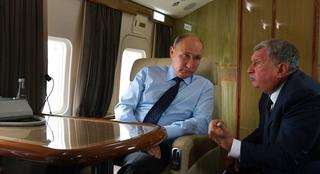
Washington thinks punitive measures will change Moscow’s calculus, but the Russian economy is doing just fine.
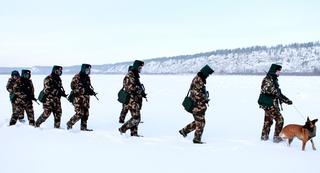
The failure of the Program of Cooperation (2009–2018) cannot be blamed entirely on the inertia of Russian bureaucrats or the paucity of local budgets. The program was underdeveloped from the start.
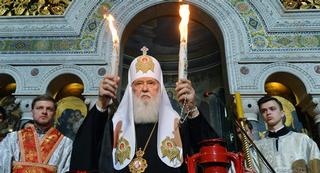
Ukraine already has the autonomous Moscow Patriarchate Church. Soon, the country might also have an autonomous Constantinople Patriarchate Church. The Moscow patriarch has threatened to sever ties with Constantinople if the Ukrainian Orthodox Church becomes autocephalous, or fully independent from another country’s patriarch. This probably won’t happen if the church only becomes autonomous, stopping one step short of autocephaly.
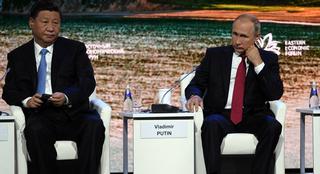
Conventional wisdom in Washington ignores the degree to which shortsighted U.S. policies are pushing Russia and China closer together. Now would be a good time for U.S. policymakers to rethink a policy that antagonizes both of the United States’ principal geopolitical rivals and to think more creatively about how to manage a new era of increased competition among great powers.
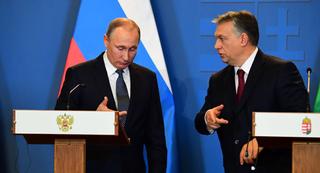
Widely regarded as the EU’s most pro-Russian member-state, Hungary is, in fact, cooling to Russia. The two countries’ leaders are focused on old projects instead of looking to the future, while Viktor Orban is growing more critical of Russia both at home and abroad. For Orban, Vladimir Putin is increasingly useless, having been replaced with an even better ally: Donald Trump.

The largest coalition of support for the Russian regime in modern history is over. Due to the fusion of the ruling elite and business, the Russian authorities have no one left to blame for poverty and falling standards of living besides themselves. But the government may have one last trick up its sleeve: repression.
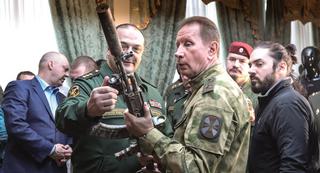
Viktor Zolotov’s video message to Alexei Navalny—a crude and highly personal address for an influential national security official—underscores the increasing incoherence of the authorities’ strategy for dealing with Navalny. More important, it points to the emergence of a state of “every man for himself” and the splintering of Vladimir Putin’s inner circle.

Unhappy with plans to raise the retirement age, the decline in their living standards, and tax hikes, Russians can’t vote for the real opposition. Strong candidates are either not allowed to run or prefer to cooperate with the authorities by not running, while in-system parties deliberately tone down their rhetoric. Under such conditions, the protest vote becomes random: people are willing to vote for anyone but the ruling regime candidates.