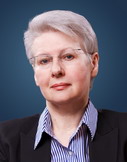
Lilia Shevtsova

Senior Associate
Russian Domestic Politics and Political Institutions Program
Moscow Center
Shevtsova chairs the Russian Domestic Politics and Political Institutions Program at the Carnegie Moscow Center, dividing her time between Carnegie’s offices in Washington, DC, and Moscow. She has been with Carnegie since 1995.
 

Education

PhD, Political Science, Academy of Social Sciences
MA, BA, History and Journalism, Moscow State Institute of International Relations

Languages

English; Russian

Secondary Contact

  • Viktoria Shapovalova
  • tel +7 495 935 8904
  • fax +7 495 935 8906
  • Email
 

Lilia Shevtsova chairs the Russian Domestic Politics and Political Institutions Program at the Carnegie Moscow Center, dividing her time between Carnegie’s offices in Washington, DC, and Moscow. She has been with Carnegie since 1995.

Previously, Shevtsova was a professor of political science at the Moscow State Institute of International Relations, deputy director of the Institute for International Economic and Political Studies of the Russian Academy of Sciences, and director of the Center of Political Studies in Moscow. She has been a visiting professor at the University of California at Berkeley, Cornell University, and Georgetown University as well as a fellow at the Woodrow Wilson International Center for Scholars. Shevtsova was also a member of the executive council of the International Institute for Strategic Studies, founding chair of the Davos World Economic Forum’s Global Agenda Council on the Future of Russia, and member of the Global Agenda Council on Terrorism and Weapons of Mass Destruction.

Currently, Shevstova is a member of the Editorial Board for the American Interest, Pro et Contra, Demokratizatsiya, and the Journal of Democracy. In addition to participating in the Davos World Economic Forum’s ongoing Global Redesign Initiative program, she is a senior research associate at the Russian Academy of Sciences’ Institute of Economics and an associate fellow at the Royal Institute of International Affairs (Chatham House). She is also a member of the board for the Institute for Human Sciences at Boston University, the Women in International Security international association, the Liberal Mission Foundation, and the New Eurasia Foundation.

Shevtsova is the author and editor of fifteen books, including: Putin’s Russia (revised and expanded edition; Carnegie Endowment, 2005); Russia—Lost in Transition (Carnegie Endowment, 2007); Lonely Power (Carnegie Moscow Center and ROSSPEN, 2010; English edition: Carnegie Endowment, 2010); and Change or Decay with Andrew Wood (Carnegie Endowment, 2011).

  • Op-Ed The Moscow Times June 9, 2013
    Russian and Turkish Crisis

    The causes and nature of the Russian and Turkish protests, as well as the respective regimes’ reactions to them, are strikingly similar.

  •  
  • Putin
    Op-Ed Metro June 3, 2013
    Russia and the West at Each Other’s Throats Again

    Putin does not want a collision with the West, but at the same time he wants to contain the West both within and around Russia.

  •  
  • Op-Ed American Interest April 5, 2013 Русский
    A Realist’s Response to an Idealist

    Introducing a normative dimension into the U.S. relationship with the Kremlin will complicate bilateral relations, but it will also help the United States regain the trust and respect of Russia’s pro-Western constituency.

  •  
  • Op-Ed Global Asia March 28, 2013
    Russia’s “Pivot” to China: Is It Real or Fake?

    Russia has embarked on its own “pivot” toward China, but it is far from certain that Moscow will find Beijing a comfortable partner.

  •  
  • Op-Ed Day March 19, 2013 Русский
    What Does Helsinki 2 Mean?

    Western society wants to bring back a normative dimension to foreign policy and stop the export of corruption from authoritarian and semi-authoritarian countries to the West.

  •  
  • Op-Ed Day February 21, 2013 Русский
    Orange Revolution and Putin’s Overturn

    For the first time, Moscow has said openly that it will limit the West and its influence not only in Russian territory but also in the post-Soviet countries.

  •  
  • Op-Ed American Interest February 21, 2013
    Here We Go Again: Falling for the Russian Trap

    While the United States has made mistakes, the current state of Russian-American relations stems mostly from the Kremlin’s creation of imitation democracy and its attempts to exploit the West and anti-Americanism for political survival.

  •  
  • Op-Ed American Interest February 11, 2013
    Russia and China: Is the World Ready for Their Decline?

    A comparison of China and Russia can reveal not only the dramas of undemocratic societies and the limitations of modernization efforts by top-down governments, but also the challenges that the West faces.

  •  
  • Op-Ed Financial Times February 6, 2013 Русский
    A New Way to Contain Russia

    It is understandable that Western leaders prefer to strike tactical deals with the Kremlin and hope Russia does not go down on their watch. But there is another approach: stop helping the Kremlin.

  •  
  • Russia XXI: The Logic of Suicide and Rebirth
    Report January 31, 2013
    Russia XXI: The Logic of Suicide and Rebirth

    Russia has finally reached the point when its very form of existence through the personalized power system and its attempts to justify itself by ideological and territorial expansion—the Russian Matrix—is under question.

  •  
  • Change or Decay
    Washington October 31, 2011
    Change or Decay: Russia's Dilemma and the West's Response

    Two decades after the collapse of the Soviet Union, the West has yet to adjust to the post-Soviet reality and Russia has not settled on its relationship with the rest of the world.

  •  
  • Moscow: Carnegie Moscow Center July 5, 2011 Русский
    20 Years Without the Berlin Wall: A Breakthrough to Freedom

    Enormous societal and political shifts 20 years ago opened prospects for a new, united Europe. Despite Russia’s role in this peaceful departure from totalitarianism, the country’s course in the subsequent two decades was not so straightforward. While the demolition of the Berlin Wall is no guarantee of success, democratic transformations are a necessary precondition.

  •  
  • Lonely Power
    Washington September 8, 2010
    Lonely Power

    While the "reset" in U.S.–Russian relations has come with closer cooperation on arms control, Afghanistan, and Iran, as long as Russia's system of personalized power rests on anti-Western principles, a true reset is unattainable.

  •  
  • Moscow: Liberal Mission Foundation December 25, 2008 Русский
    Path to Europe: Estonia, Lithuania, Latvia, Poland, Hungary, Czech Republic, Slovakia, Bulgaria, Romania, Slovenia, and East Germany

    Eastern European and Baltic countries that have recently joined NATO and the European Union have undergone social and economic reforms, but they have also faced significant challenges along the way. Can their experience be of use to Russia?

  •  
  • Washington September 5, 2007
    Russia—Lost in Transition: The Yeltsin and Putin Legacies

    Lilia Shevtsova searches the histories of the Yeltsin and Putin regimes, exploring within them conventional truths and myths about Russia, paradoxes of Russian political development, and Russia’s role in the world.

  •  
  • Washington December 28, 2004
    Putin's Russia (Revised and Expanded Edition)

    This revised edition explores the true nature of Putin’s leadership and how far he is willing to go and capable of going with further transformation. The book includes an examination of the recent presidential and parliamentary elections and their effects on Putin’s leadership and Russia.

  •  
  • Washington September 24, 2001 Washington, D.C.
    Gorbachev, Yeltsin, and Putin: Political Leadership in Russia's Transition

    Focusing on Russia's three top leaders since 1985, this book examines their goals, evolving ideas, styles of rule, institution-building, and impacts on policy.

  •  
  • Washington May 1, 1999
    Yeltsin's Russia: Myths and Reality

    Combining keen political analysis with the unique perspective of a native observer, Lilia Shevtsova offers a valuable assessment of the forces that will shape the post-Yeltsin era.

  •  
  • WAMU's Diane Rehm Show March 5, 2012
    Russian Presidential Election Results

    Despite the Kremlin's need for domestic and international legitimacy, there was widespread irregularity and fraud in Russia's recent presidential elections.

  •  
  • Lilia Shevtsova
    NPR's Morning Edition December 26, 2011
    Russians Keep Up Protests For Free Elections

    Russian protesters hail from a new generation who are tired of Vladimir Putin’s regime. Given Putin’s refusal to give up power and the impending presidential elections, further unrest is likely.

  •  
  • Shevtsova
    NewsHour with Jim Lehrer February 29, 2008
    Election Marks Uncertain Milepost in Russian Democracy
  •  
  • NPR's Talk of the Nation May 31, 2007
    Cold War Rivalries Rekindled?

    As the United States and Russia argue over missile shields and develop new weapons to overcome them, some wonder if all this tough talk could rekindle old rivalries.

  •  
  • April 19, 2012 Washington, D.C.
    The Next Phase of U.S.-Russia Relations

    Following Senator Ben Cardin's remarks on the role of human rights issues in U.S.-Russia relations, a panel of experts discussed the likely future course of the bilateral relationship.

  •  
  • November 14, 2011 Washington, D.C.
    Change or Decay

    Relations between the West and Russia are still shifting as the West has yet to adjust to the post-Soviet reality and Russia has not settled on its relationship with the rest of the world.

  •  
  • November 14, 2011 Washington, D.C.
    20 Years of Ukraine's Independence

    The twentieth anniversary of Ukraine’s independence from the Soviet Union comes at a moment of unique challenge and opportunity for the country, as Ukrainians look to their new leaders to resolve longstanding problems.

  •  
  • May 19, 2011 Moscow Русский
    Book Presentation “20 Years Without the Berlin Wall: A Breakthrough to Freedom”

    The fall of the Berlin Wall in 1989 ushered in a time of momentous social and political change, including in Russia, but Russia’s development followed a different path than that of many Eastern European countries.

  •  
  • April 25, 2011 Moscow Русский
    Russian Opposition About the Russian Authorities, Upcoming Elections, the Current Situation, Foreign Policy, and Themselves

    The regime of personalized power that Russians have grown accustomed to is at risk of collapse. The People’s Freedom Party “For Russia Without Arbitrariness and Corruption” aims to play a role in helping change Russian politics through legitimate means.

  •  
  • Gunnar Wiegand and Lilia Shevtsova
    February 9, 2011 Brussels
    Russia's Future

    Russia is both a resurgent power on the international stage and a key partner for Europe. However, the country still faces a myriad of social and economic challenges.

  •  
  • Lilia Shevtsova and James Collins
    September 10, 2010 Washington, D.C. Русский
    Book Launch: Lilia Shevtsova’s Lonely Power

    Russia’s current push for economic modernization coincides with growing political activism and concerns, both among domestic groups and in the West, about the absence of political liberalization.

  •  
  • July 1, 2009 Moscow
    Moscow Summit: Expert Briefing Live From Moscow

    Ahead of the July 6-8 U.S.-Russia summit, Carnegie experts in Moscow discussed expectations for the visit, prospects for START negotiations, and areas for potential cooperation, including Iran, Afghanistan, and energy security.

  •  
  • Dmitri Trenin
    February 6, 2009 Washington, D.C.
    Is Russia Ready for Change?

    The international financial crisis may help sustain Russia's political and economic system in the short-term or it may usher in rapid change. Regardless, it is unsustainable in the long run.

  •  
  • Putin's Russia
    March 24, 2005 Washington, D.C.
    Russia 2005: The Logic of Backsliding

    Lilia Shevtsova on current state of Russian domestic politics and launches revised edition of Putin's Russia.

  •  
Source: http://carnegieendowment.org/experts/index.cfm?fa=expert_view&expert_id=5

Stay In The Know

Enter your email address in the field below to receive the latest Carnegie analysis in your inbox!

Personal Information
 
 
Carnegie Moscow Center

 
16/2 Tverskaya Moscow, 125009 Russia
Phone: +7 495 935-8904 Fax: +7 495 935-8906
Please note...

You are leaving the Carnegie–Tsinghua Center for Global Policy's website and entering another Carnegie global site.

请注意...

你将离开清华—卡内基中心网站,进入卡内基其他全球中心的网站。